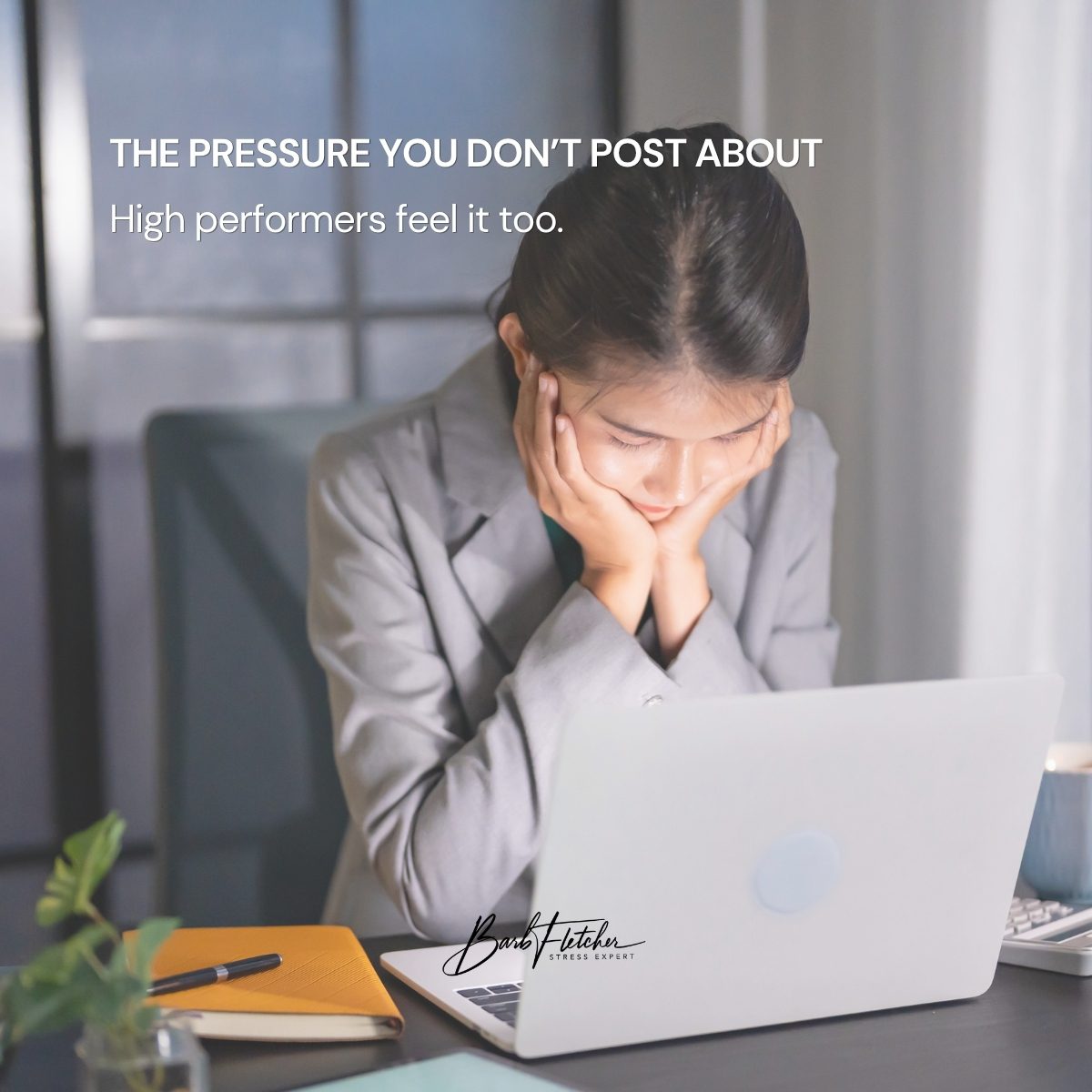
From the outside, entrepreneurship can look exciting.
Growth.
Vision.
Momentum.
Choice.
But many entrepreneurs know a different reality.
The pressure is not only in the deadlines, revenue goals, launch dates, team decisions, or constant uncertainty. Often the heaviest pressure is internal. It is the pressure to stay sharp, keep building, solve problems fast, and never lose momentum.
It is the pressure to be the one who holds everything together.
And because high performers are often praised for drive, discipline, and endurance, they can miss the moment when commitment turns into chronic self-pressure.
That is when self-talk starts sounding less like leadership and more like attack.
You cannot slow down now.
You are the bottleneck.
Rest later.
No one is coming to save this but you.
A lot of entrepreneurs live in a near-constant state of invisible bracing.
Not because they are weak.
Because they care deeply.
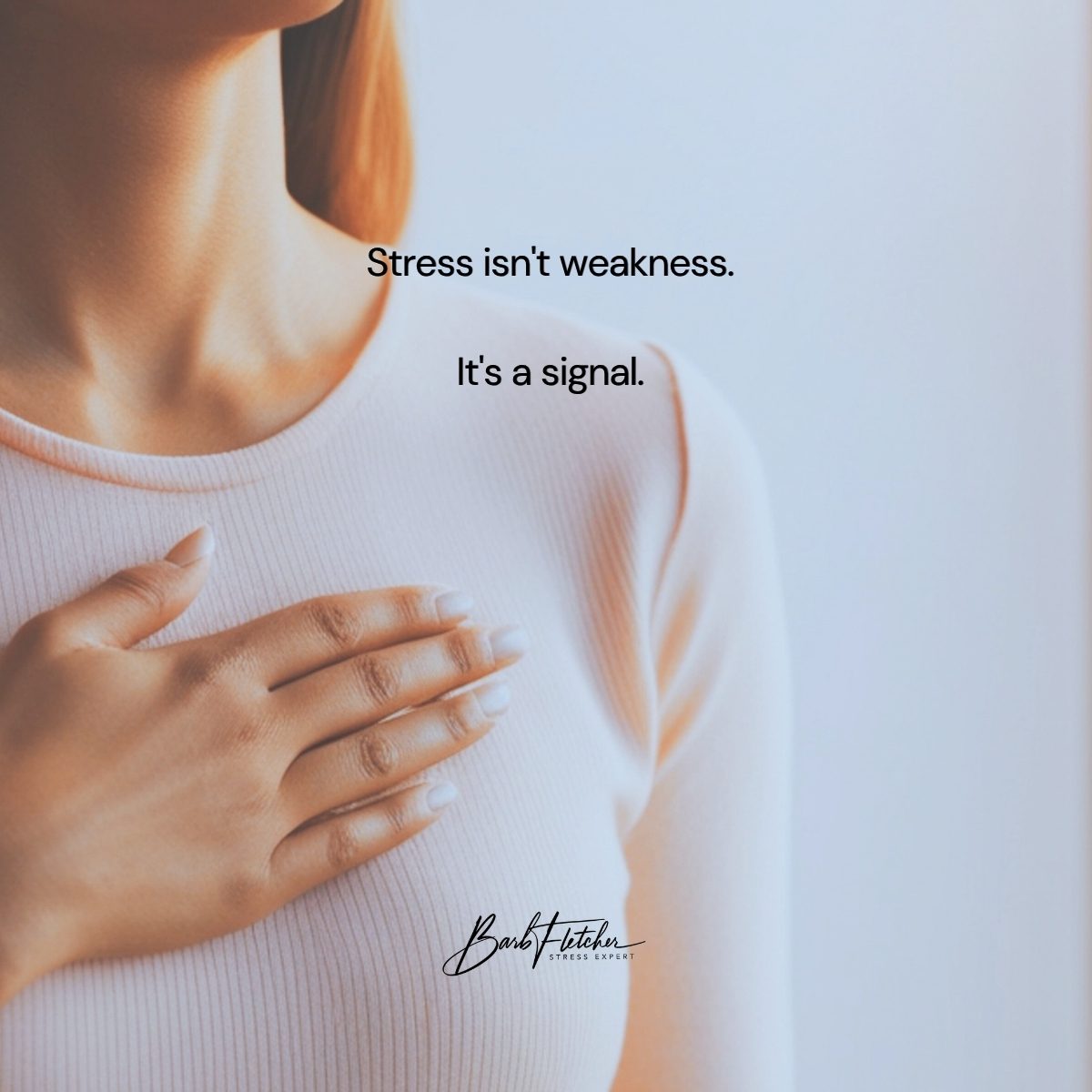
Stress is a signal, not a weakness.
The invisible expectations driving your stress
Entrepreneurs often carry two workloads at once.
The visible workload is the business itself. Meetings, planning, marketing, delivery, finances, hiring, setbacks, decisions.
The invisible workload is the identity pressure underneath it. The belief that you should always know. Always produce. Always recover quickly. Always stay confident. Always keep going.
When your livelihood is linked to your performance, it becomes easy to confuse rest with risk.
That is why so many high performers struggle to pause.
They do not just fear losing time.
They fear losing edge.
Control.
Progress.
Worth.
So they keep pushing. Even when their body is tired. Even when their thinking gets noisy. Even when the quality of their decisions starts slipping.
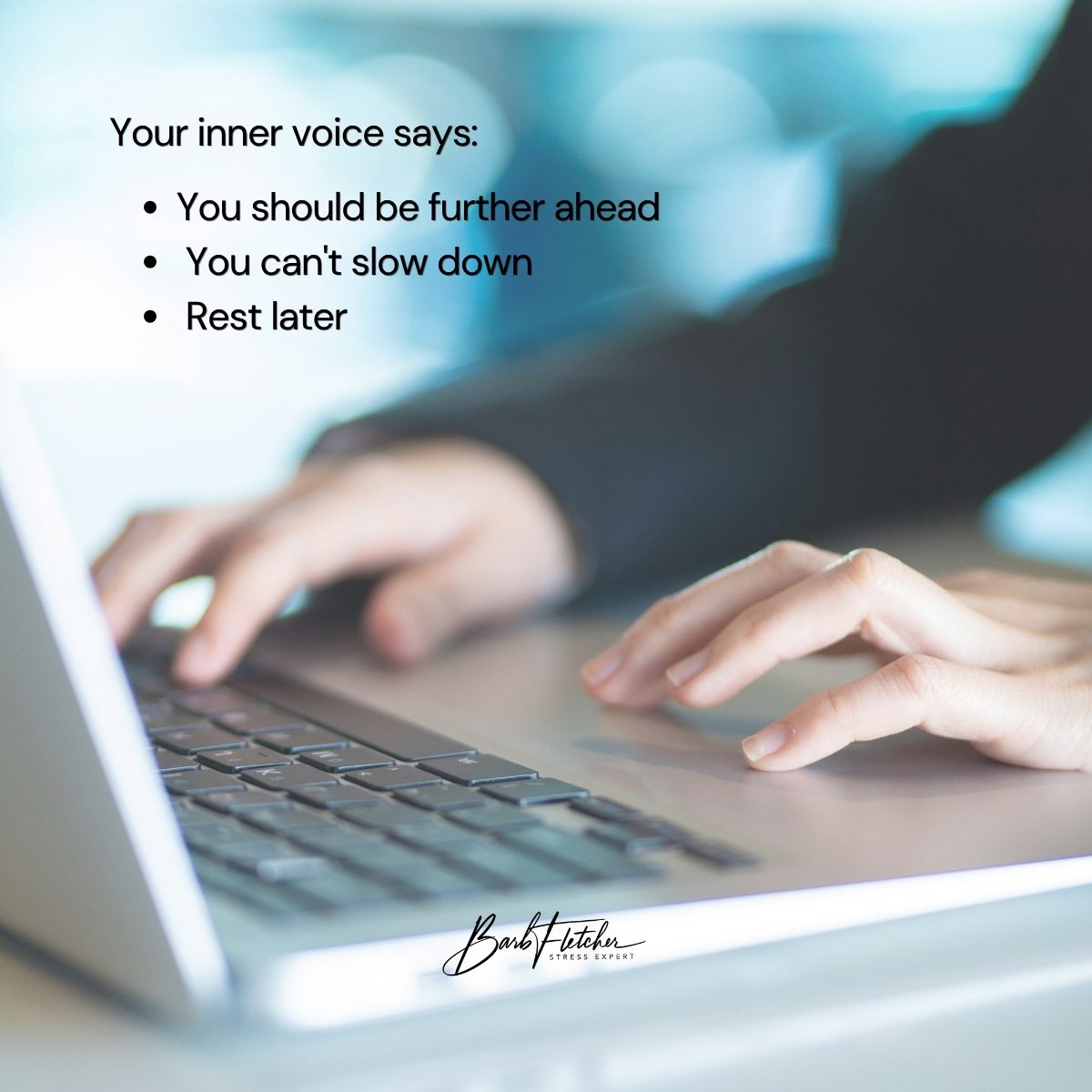
Why rest feels harder for high performers
For many entrepreneurs, slowing down is not a time-management problem. It is a nervous system problem.
If your body has learned that pressure equals productivity, calm can feel unfamiliar. If you are used to performing under adrenaline, stillness can feel like failure.
The result is a strange pattern: you want rest, but you do not know how to receive it. You take a break, but your mind keeps working. You step away, but your body remains braced.
Then the self-talk arrives.
You are wasting time.
Other people are outworking you.
You can relax after the next milestone.
You just need to be more disciplined.
But the next milestone never really ends the pressure if the pressure is being generated from within.
The cost of unmanaged entrepreneurial stress
Unmanaged stress does not just affect mood. It affects clarity, energy, relationships, and leadership.
It can look like decision fatigue and reactive choices.
It can look like irritability with your partner, your team, or yourself.
It can look like a loss of creativity, shrinking patience, and a business that starts feeling heavier than meaningful.
It can look like achieving visible progress while privately feeling less alive.
HeartMath’s business-oriented findings point in this direction. In a large study discussed in Heart Intelligence, coherence training in five global companies led, in just six to nine weeks, to average outcomes among those frequently experiencing symptoms such as a 44% drop in fatigue, 52% drop in anxiety, and a 33% improvement in sleep. That matters for entrepreneurs because performance is never separate from physiology.
A depleted founder does not lead from the same place as a regulated one.
What your self-talk is trying to tell you
Harsh self-talk is often mistaken for ambition.
But self-attack is not the same thing as standards.
Healthy ambition says, Let’s keep growing.
Stress-driven ambition says, Nothing is enough until you are exhausted.
One builds capacity.
The other drains it.
And here is the hard truth: many entrepreneurs are not only managing market pressure. They are also managing an internal voice shaped by fear, urgency, comparison, and survival.
So the question is not only, “How do I work less?”
It is, “What am I believing that makes rest feel dangerous?”
That question gets closer to the root.
Coherence changes the quality of decision-making
This is where regulation becomes a business tool, not just a wellness idea.
HeartMath describes the heart as being in ongoing communication with the brain and notes that heart signals influence strategic thinking, reaction time, and self-regulation. It also notes that negative emotional states can produce disordered heart rhythms that increase stress and impair mental functioning, while renewing emotions such as appreciation and care create more coherent rhythms that support clearer thinking.
In practical terms, coherence helps you make decisions from steadiness instead of panic.
That might mean pausing before sending the reactive email.
Taking sixty seconds before entering the investor call.
Breathing before interpreting one disappointing metric as a total failure.
Interrupting the story that says every hard moment means you are losing.
Coherence is a superpower.
Because in entrepreneurship, the quality of your internal state shapes the quality of your external leadership.
You do not need less ambition. You need less inner threat.
This is an important distinction.
The goal is not to lose your fire.
The goal is not to stop caring about excellence.
The goal is to remove the unnecessary layer of internal threat that makes every challenge feel like an emergency and every pause feel like a betrayal.
When pressure softens, you do not become lazy.
You become more precise.
More creative.
More resilient.
More able to lead from values instead of survival.
One section of Heart Intelligence speaks directly to today’s high-speed world, saying leaders and employees need to be smarter and more intuitive than before, and that a strong heart and clear head are both essential. That is the kind of business wisdom more founders need.

A practical reset for the middle of the day
When you notice the pressure rising, try this:
Pause.
Breathe more slowly than usual.
Bring attention to the heart area.
Name one thing you genuinely appreciate right now.
Then ask: What would the next clear step look like if I were not talking to myself like an enemy?
That is not fluff. It is a pattern interrupt.
It breaks the loop between pressure and self-attack.
It helps your body shift out of internal threat.
And that gives your best thinking a chance to return.
Life can be easier than we’ve been taught.
Not because business is easy. But because constant inner war is not the price of meaningful work.
Closing reflection and invitation
Many entrepreneurs wear pressure like proof that they care.
But pressure without recovery slowly narrows your capacity to lead, love, think clearly, and enjoy what you are building.
Stress is not a weakness. It is a signal from the nervous system asking for attention.
If this sounds familiar, the next step is not harder hustle. It is understanding your own patterns of pressure, expectation, and self-talk so you can build from a steadier place.
You can start with the Stress & Wellbeing Assessment, book a discovery conversation, or explore coaching to strengthen resilience, clarity, and sustainable performance.

Comment